In the evolving landscape of dermatology and trichology, a paradigm shift is occurring. Traditionally, hair loss (alopecia) was viewed primarily through the lens of genetics and hormonal imbalances, such as the action of dihydrotestosterone (DHT). However, recent clinical research has identified a more insidious catalyst: chronic micro-inflammation of the scalp.
As the “skintification” of hair care continues to influence global beauty trends, the industry is beginning to treat the scalp with the same clinical rigor as facial skin care. At the forefront of this movement is Eurece, a brand dedicated to bridging the gap between advanced cosmeceuticals and physiological wellness.
The Mechanism of Inflammatory Alopecia
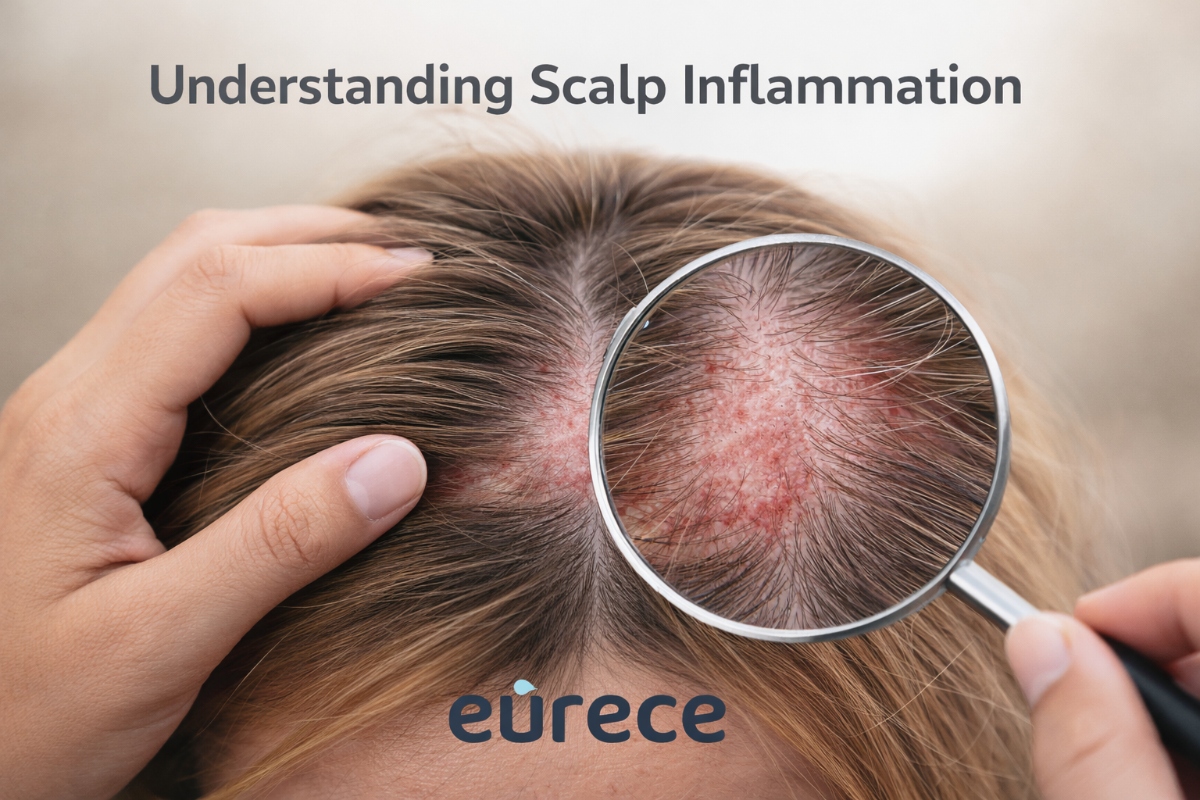
Scalp inflammation, often subclinical and invisible to the naked eye, acts as a silent disruptor of the hair growth cycle. When the scalp’s homeostasis is compromised by environmental stressors, microbial overgrowth, or chemical irritants, the body initiates an inflammatory response.
This chronic inflammatory state leads to the release of pro-inflammatory cytokines and oxidative stress markers. These molecules infiltrate the hair follicle, leading to “follicular miniaturization”—a process where the hair follicle shrinks, produces thinner strands, and eventually ceases production entirely. By addressing anti-inflammation as a primary objective, clinicians can effectively prolong the anagen (growth) phase of the hair cycle.
Clinical Synergy: Redensyl and Piroctone Olamine
To combat the multifaceted nature of scalp distress, Eurece formulations leverage clinically studied ingredients that target both the symptoms and the underlying causes of inflammation.

- Redensyl: Recognized as a breakthrough in regenerative medicine, Redensyl targets the hair follicle stem cells (ORSc) and the dermal papilla. By favoring the initiation of a new growth cycle, it serves as a non-invasive alternative to traditional hair transplants.
- Piroctone Olamine: A cornerstone in medical-grade scalp health, Piroctone Olamine is superior to traditional antifungal agents. It effectively controls the proliferation of Malassezia, a yeast-like fungus linked to dandruff and inflammatory scalp conditions, thereby reducing the subsequent follicular stress that leads to shedding.
The Intersection of Botanical Actives and Clean Beauty
The modern consumer demands efficacy without compromise. The rise of clean beauty has necessitated a shift away from harsh sulfates and parabens toward high-performance botanical actives.
Eurece integrates these botanical compounds to provide a soothing, antioxidant-rich environment for the scalp. These plant-derived molecules work in tandem with synthetic “hero” ingredients to modulate the scalp microbiome. This holistic approach ensures that every product is dermatologist approved for those with sensitive, reactive, or thinning scalps.
Conclusion: The Future of Scalp Restoration
Understanding that the scalp is an extension of the facial envelope is essential for modern hair restoration. By focusing on the “skintification” of the scalp, we move away from superficial fixes and toward cellular-level health.
Through the strategic use of cosmeceuticals that prioritize anti-inflammation and follicular vitality, Eurece remains at the cutting edge of trichological science. For those seeking a clinically studied regimen, addressing the hidden cause of inflammation is not just a trend—it is a physiological necessity for sustainable hair density.
References
- Headington, J. T. (1996). Transverse sectioning of hair follicles: A diagnostic aid in mammalian trichology.Archives of Dermatology.
- Magro, C. M., Rossi, A., & Poe, J. (2011). The role of inflammation in the pathogenesis of androgenetic alopecia. International Journal of Trichology.
- Indu, S., et al. (2020). Efficacy of Redensyl in the management of hair loss: A randomized, double-blind, placebo-controlled clinical trial. Journal of Cosmetic Dermatology.
- Pierard-Franchimont, C., et al. (2002). Effect of Piroctone Olamine in the treatment of androgenetic alopecia.Dermatology Research and Practice.
- Trüeb, R. M. (2015). Scalp Resiliency: The Role of the Microbiome and Inflammation in Hair Health. Journal of Investigative Dermatology Symposium Proceedings.